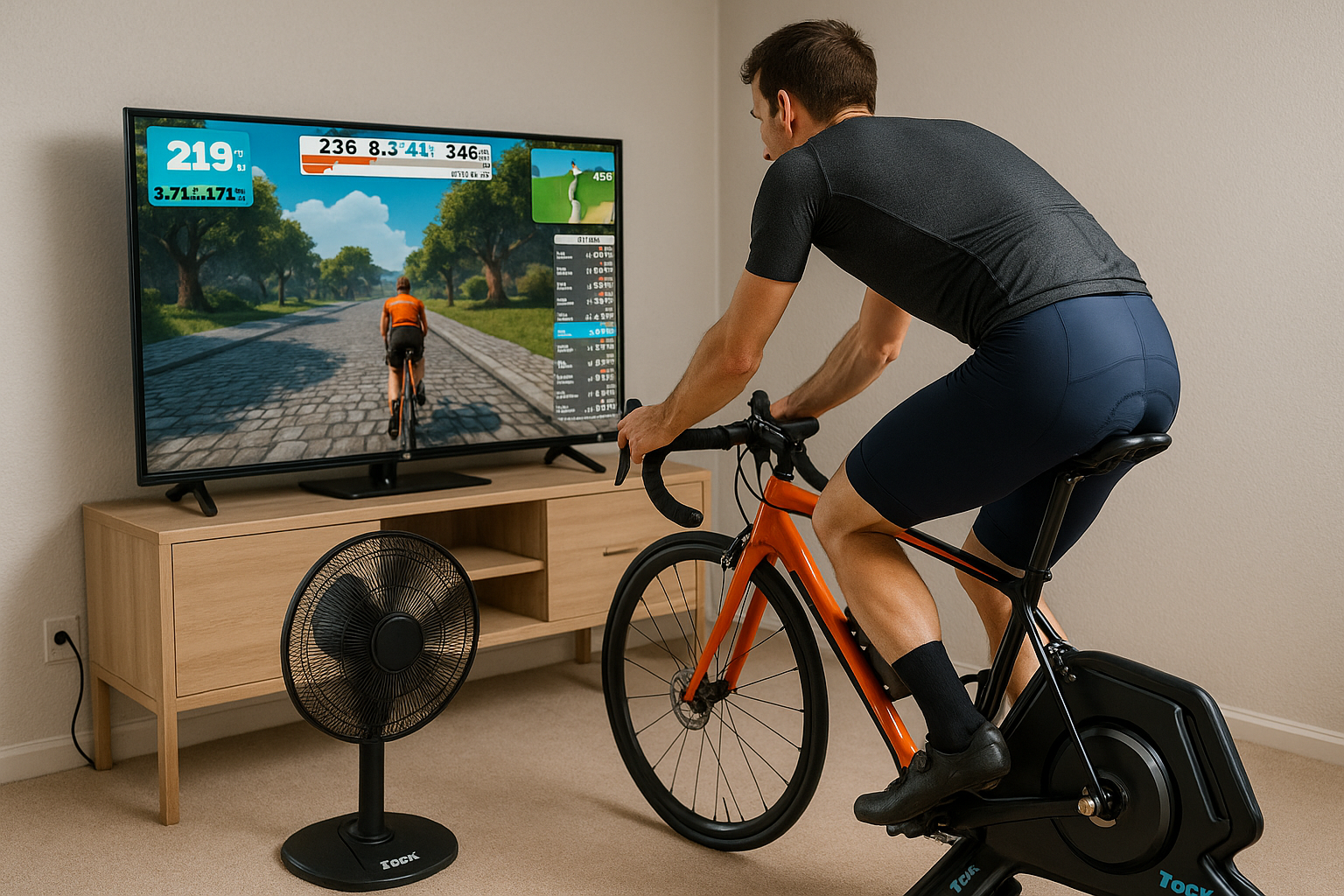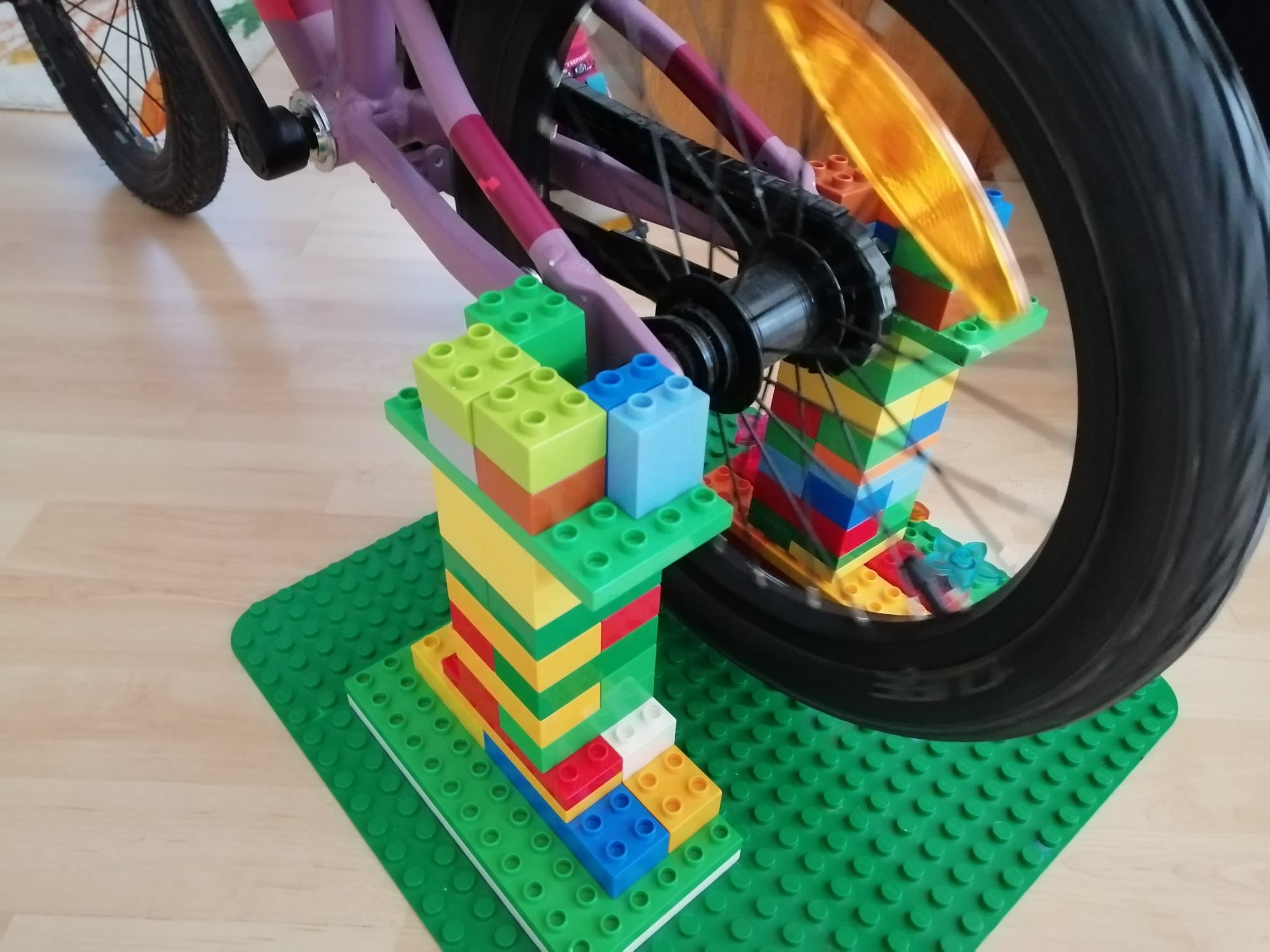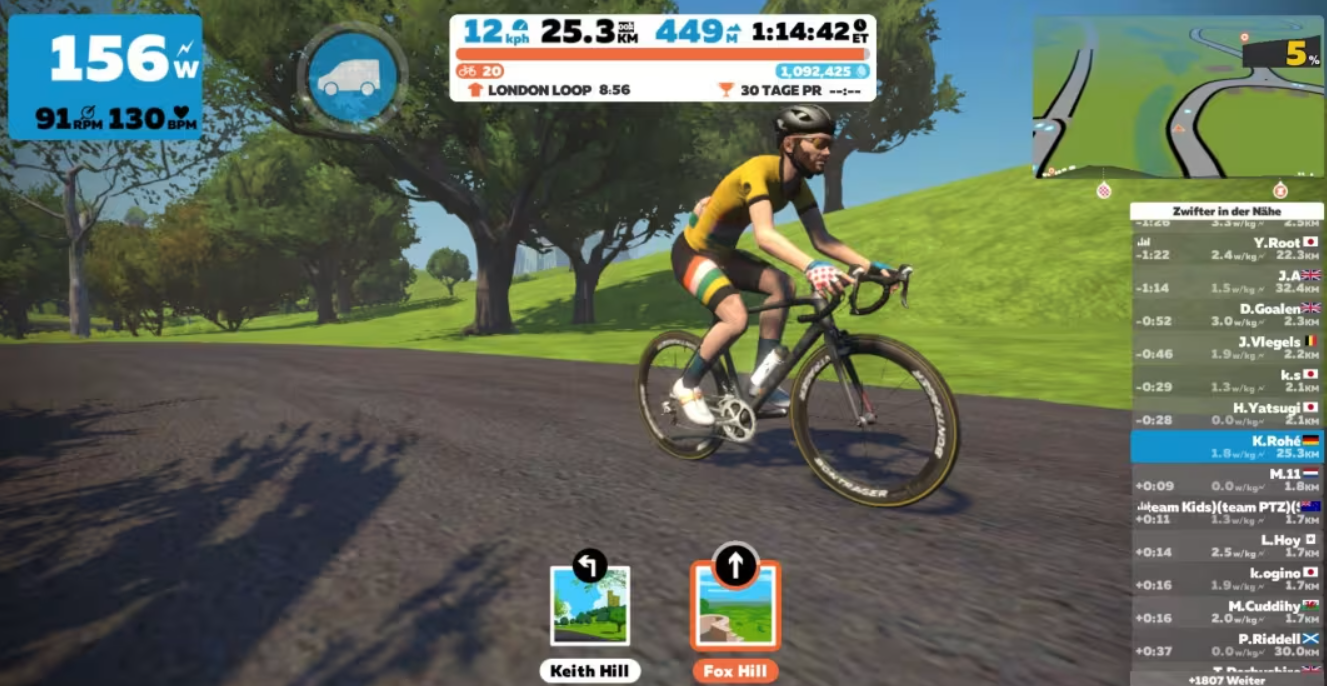
Indoor training software has become one of the most important pillars of modern cycling and fitness. Platforms for indoor cycling now combine structured training, virtual racing, smart trainer integration and social features—making indoor training more engaging and more effective than ever before. This article gives a compact overview of how indoor training software evolved, why it matters today and how the leading platforms differ, before diving deeper into individual in-depth reviews.
Indoor training software did not start out as a revolution. For a long time, it was a side topic—useful, practical, but clearly separated from what many considered “real” cycling.

That perception began to change around 2018. At that time, while working as a journalist at Tour Magazin, I was involved in publishing what was the first dedicated special on indoor training—both in print and online. It was the first time a well-established medium in the traditionally road-focused cycling world treated indoor training as a serious topic with long-term relevance. Even then, it was clear that indoor cycling was gaining momentum not only among cyclists, but also in the wider fitness space—well before Covid, accelerated during the pandemic, and continuing strongly ever since.
Early platforms: functional, minimalistic, and mostly lonely
Looking back at the early indoor training platforms helps to understand just how dramatic the evolution has been. Early software solutions were extremely minimalistic in both design and scope. Virtual worlds were basic, sometimes abstract, and visually far removed from what contemporary video games were already capable of.
On screen, riders typically saw little more than power output and heart rate, maybe cadence. The graphics were functional and editable, but clearly not built for immersion. Social interaction was limited, and because user numbers were still low, many rides felt solitary. From today’s perspective—especially for parents trying to stay motivated in short, fragmented training windows—these platforms offered efficiency, but little emotional pull.
After one workout or an hour on the bike, the experience felt complete. There was no reason to stay longer, and no system designed to bring you back tomorrow for the fun of it.
Modern platforms: ecosystems, not just software
Modern indoor training platforms are something entirely different. They are no longer static training tools but living ecosystems that evolve constantly. New virtual worlds, fresh challenges, training plans, events and races ensure that there is always something going on.
For parents, this shift is crucial. When training time is limited and often starts late in the evening, motivation matters. Modern platforms are designed to make it easy to jump on the bike, find a meaningful session—whether a race, a group ride or a structured workout—and log off again without wasted time.
Indoor cycling today is deeply intertwined with social interaction, long-term progression and competition. And in many cases, it directly feeds back into outdoor cycling rather than existing separately from it.
Zwift: where virtual racing meets real-world impact
Zwift remains the most influential platform in indoor cycling, not just because of its size, but because of its impact beyond the screen. Through initiatives like the Zwift Academy and partnerships with professional teams, Zwift demonstrated that virtual racing can translate into real-world opportunities.
Riders have been able to qualify for professional or development teams purely through their indoor performance. That marked a fundamental shift. Indoor cycling was no longer a detached training environment — it became a pathway into road racing itself. For parents and late entrants to the sport, this also changed the narrative: indoor cycling is not a compromise, but a legitimate entry point into competitive cycling.
Combined with strong social features — the streets are crowded any time of day with group races and workouts offering new connections almost by the minute — awards, challenges and a massive global community, Zwift continues to define what indoor cycling software can be.
→ Read the full Zwift in-depth review here.
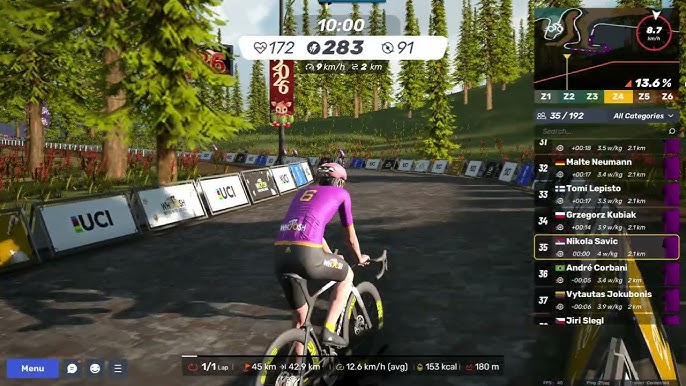
MyWhoosh: free access, fast growth and serious prize money
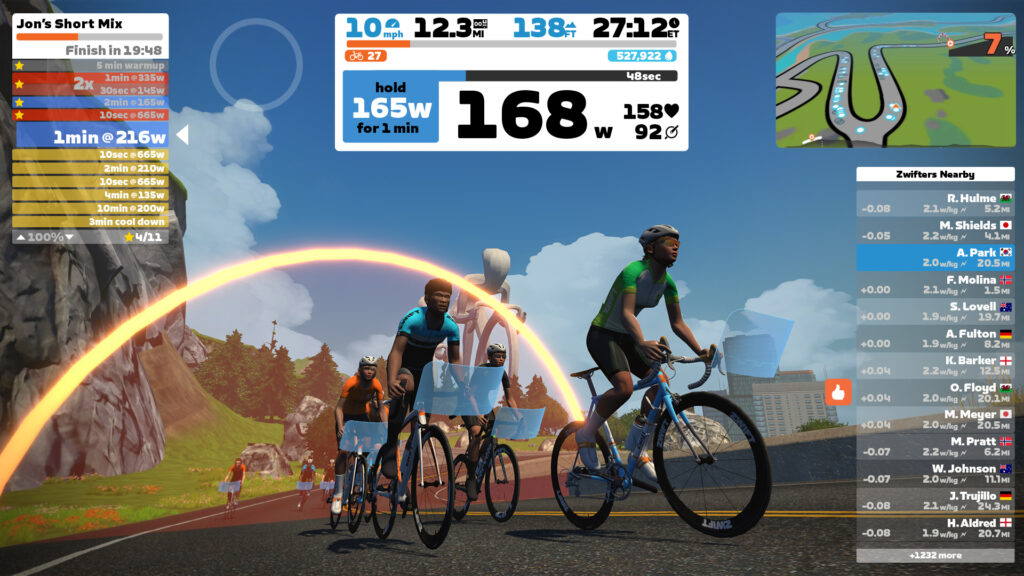
MyWhoosh entered the market later, clearly building on concepts already established elsewhere. Many features feel familiar, but the platform added a decisive twist: real prize money.
Backed by substantial funding from the United Arab Emirates, MyWhoosh operates at a different financial scale. It offers free access while hosting racing leagues where riders can win meaningful three- or even four-figure sums. This has raised the competitive level dramatically.
While MyWhoosh clearly puts a strong emphasis on high-performance racing, it also offers many of the features known from Zwift, including structured training plans, group rides and a quest- and reward-based challenge system. However, group rides and social formats are still less frequent and less central than on Zwift, and MyWhoosh is visibly working to catch up in this area with playful modes such as the Zombie Challenge. Together with Zwift, MyWhoosh currently forms the top tier of indoor racing platforms.
→ Read the full MyWhoosh in-depth review here.
Rouvy: realism and real roads for purists
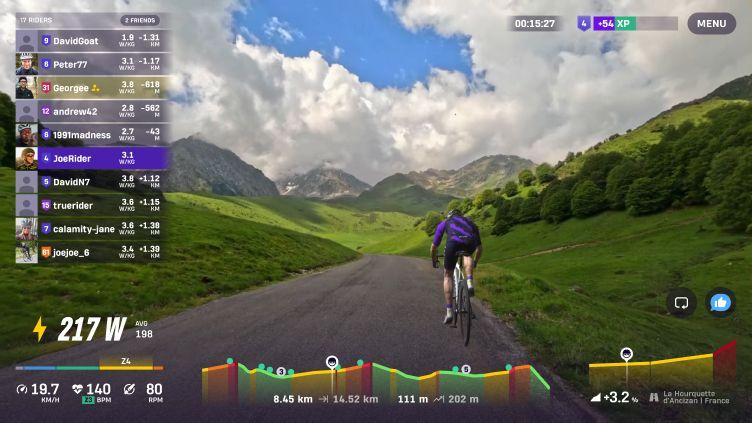
Rouvy follows a different philosophy. Instead of fully virtual worlds, it places avatars into real, filmed landscapes and routes. The emphasis is on realism and the feeling of riding actual roads rather than game-like environments.
Notable examples are the most recent editions of La Vuelta a España, where riders could complete real race stages indoors, riding through filmed versions of the course with their avatar.In summer 2025, Rouvy also acquired the Spanish competitor Bkool, but continues to focus on its established concept of real-world video routes rather than radically changing the platform.
For parents who miss outdoor riding but need predictable, interruption-friendly training sessions, this realism can be highly motivating.Rouvy feels calmer and more traditional, deliberately so, and appeals to riders who want indoor training to resemble outdoor cycling as closely as possible.
→ Read the full Rouvy in-depth review here.
Virtu Pro (formerly Veloton): a quiet goodbye to a different idea of indoor training
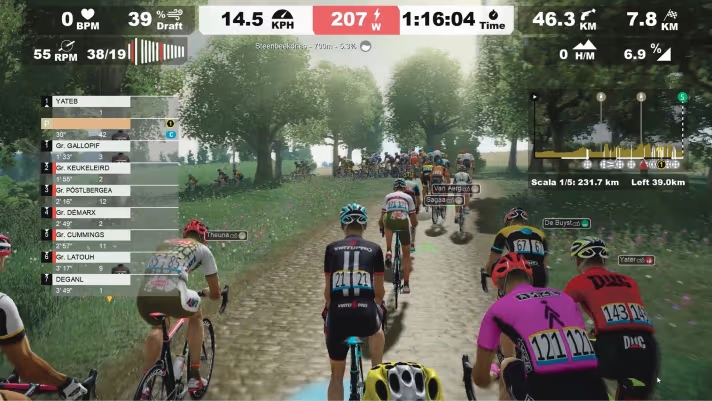
Virtu Pro, previously known as Veloton, is no longer available and has been off the market since 2025. That is a bit of a shame, because it offered a noticeably different take on indoor training software compared to today’s dominant platforms. Instead of colourful virtual worlds, Virtu Pro focused on race scenarios inspired by real professional cycling, including team-based tactics and iconic settings like riding over the cobbles of Paris–Roubaix against other teams.
From a family perspective, this was actually one of its most charming aspects. It allowed kids (and adults) to feel like they were competing withthe pros, tactics and teamwork included, rather than just riding alone against numbers. Virtu Pro may be gone, but it remains a reminder that there’s another layer of indoor training most of the current platforms neglect.
Indoor training software is only one side of the equation. Choosing the right indoor training hardware—from smart trainers to accessories—has a major impact on ride feel, accuracy and everyday usability, especially when training time is limited. In this separate overview, I break down all you need to know about indoor training hardware and how to choose the right trainer for your setup and your family life.