- Tested: August 2025 – July 2026 / 479 km
- Price: €429.99
- Recommended size: 100–120 cm / 40–55 cm inseam
- Weight: 5.5 kg
- TCD Weight Ratio: 39.0%
The short version
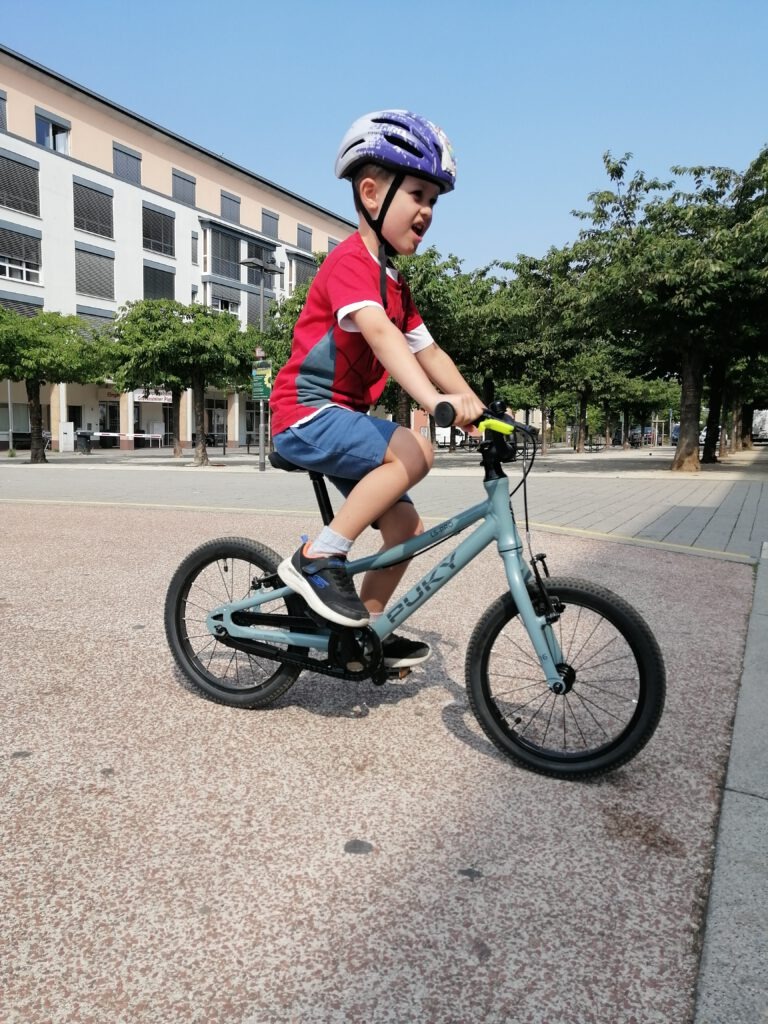
After 479 kilometres and more than a year of testing, the Puky LS Pro 16 has proved to be a remarkably well thought-out first pedal bike. Its greatest strength is not one spectacular component, but the way weight, ergonomics, gearing and controls have all been designed around a small child rather than simply shrinking an adult bicycle.
At just 5.5 kg, it is exceptionally easy for a young rider to handle. The simple single-speed drivetrain makes starting effortless, the child-sized cockpit works extremely well, and Puky’s colour-coded brake levers are such a simple but effective safety feature that we would happily see them copied across the industry.
There is a trade-off. As children become older, stronger and faster, the easy gearing that makes the LS Pro so accessible at the beginning eventually becomes its limitation. During our test, that transition was clearly noticeable.
For three- and four-year-olds progressing onto a proper pedal bike, however, the LS Pro gets an impressive amount right.
Weight: 5.5 kg makes a huge difference
Weight matters on a children’s bike in a way that is difficult to appreciate by looking at an adult bike specification sheet.
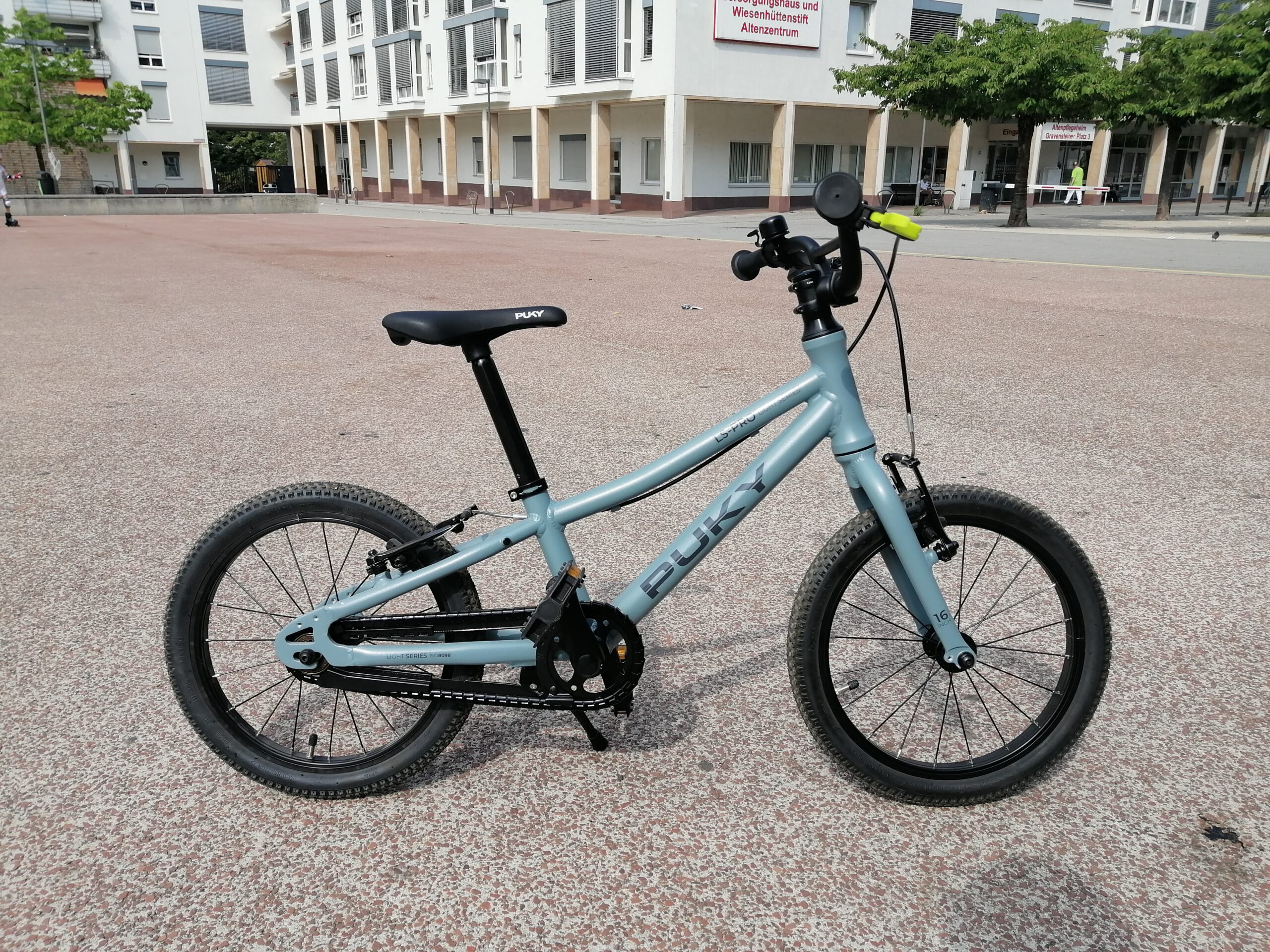
We measured the Puky LS Pro at exactly 5.5 kg, matching Puky’s stated weight.
For additional context, our TCD Weight Ratio compares the measured bicycle weight with a gender-neutral median reference body weight for the recommended rider age. Because Puky specifies the LS Pro from age three rather than giving a closed age range, we use three years as the reference age.
The gender-neutral reference weight at age three is 14.10 kg, based on WHO weight-for-age median reference data.
TCD Weight Ratio = 5.5 kg / 14.10 kg × 100 = 39.0%
In other words, the bike weighs around 39% of the reference body weight of a three-year-old.
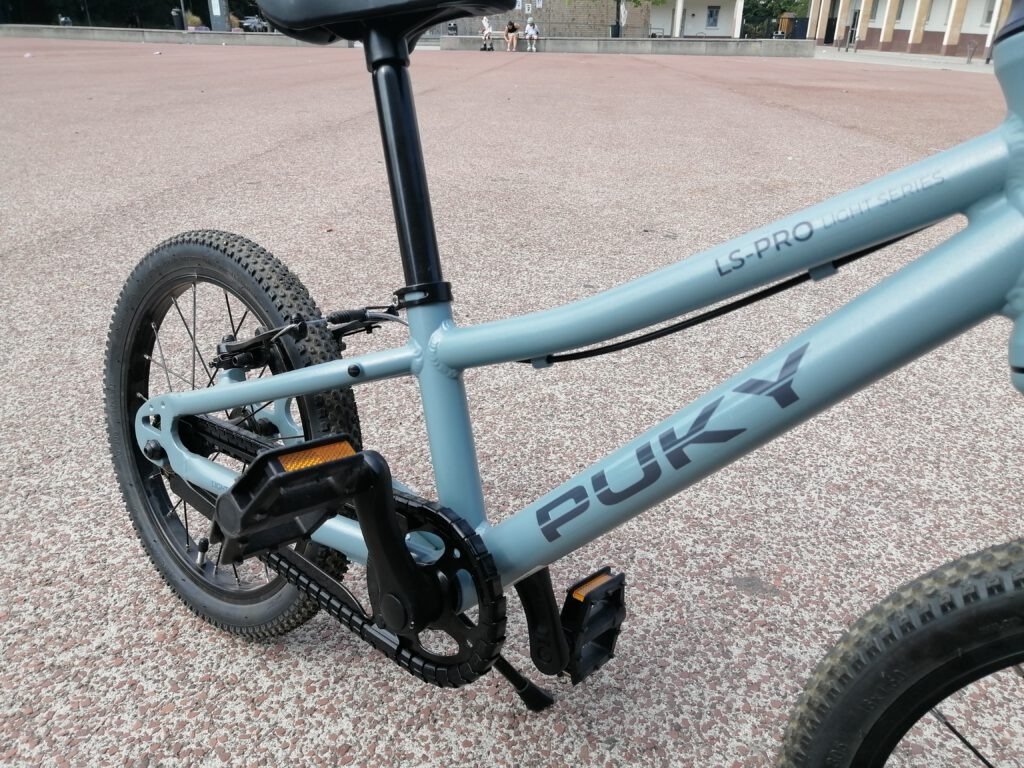
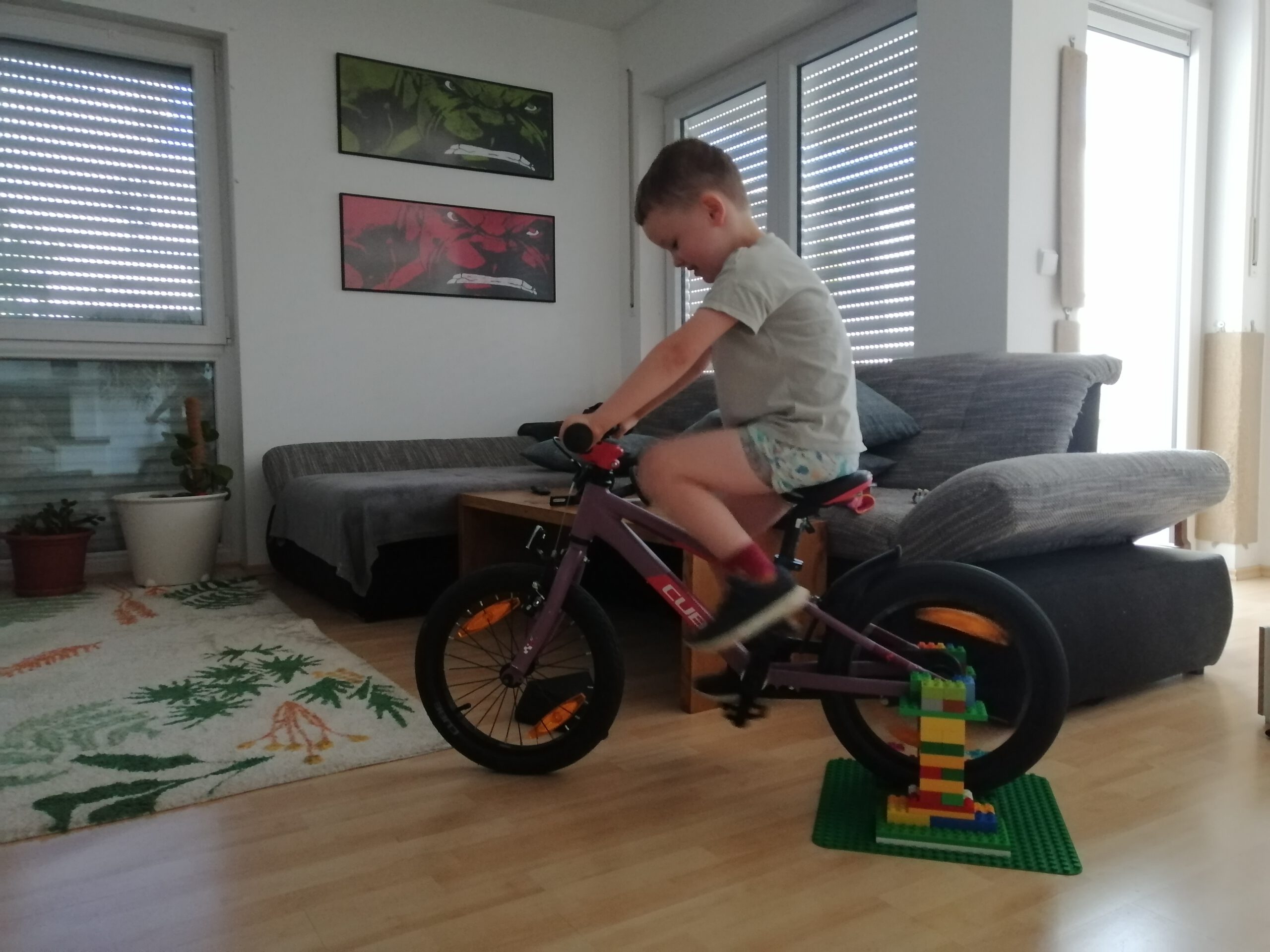
And that low weight is not merely impressive on paper. It was obvious throughout the test. Our young rider could push the bike independently, take it off its stand and manoeuvre it without constantly needing adult assistance. From the first metres, pedal input also felt as though it translated immediately into forward movement.
That sense of control is particularly valuable when a child is still building confidence on a pedal bike.
Ergonomics: designed around small bodies
The LS Pro’s ergonomics are one of its strongest features.
Depending on the setup, the riding position is relatively upright, while the cockpit offers useful adjustment as the child grows. The handlebar can be rotated to alter its position, providing up to approximately 7 cm of variation in handlebar height and reach.
Puky also uses a reduced handlebar diameter. That may sound like a minor technical detail, but for small hands it makes a very real difference. Children can wrap their fingers around the grips more naturally, which improves control and contributes to a feeling of security – particularly during those first rides.
The saddle follows the same philosophy. It measures approximately 20 cm long and no more than 11.5 cm wide. Its narrow shape suits a child’s proportions well rather than forcing short legs around an unnecessarily broad saddle.
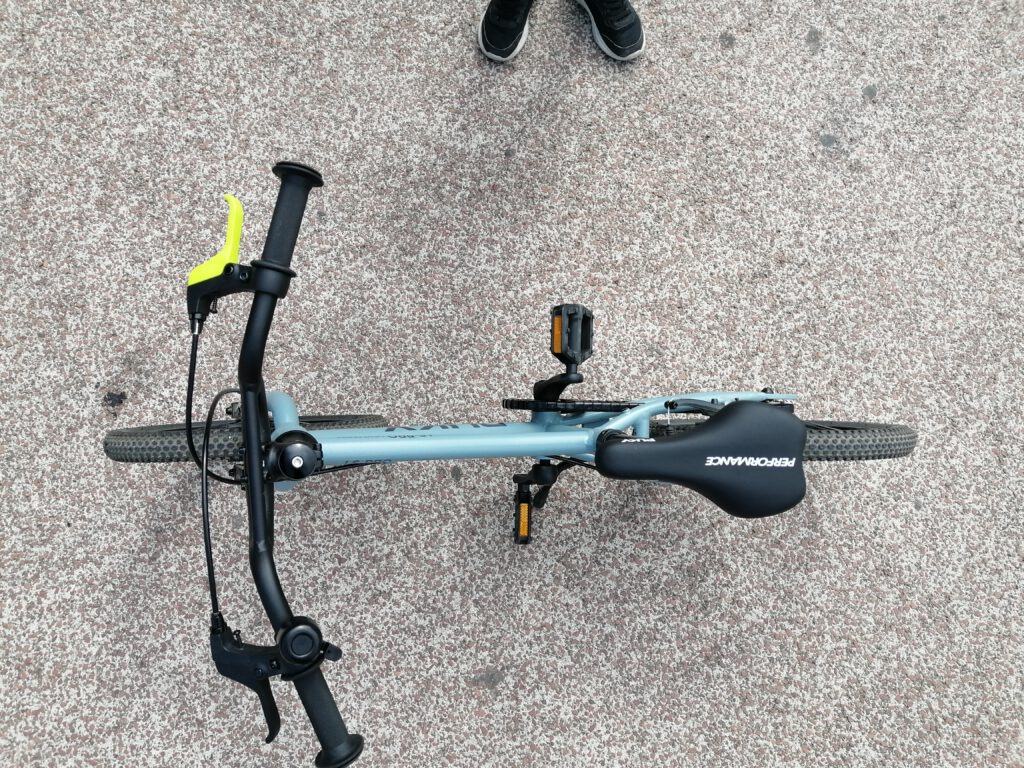
Adjusting the saddle height requires an Allen key which makes spontaneous adjustment a little less convenient, but then again who doesn’t carry a small multitool in his saddle bag? There is also an incidental advantage for the urban use: the saddle cannot simply be released and removed without a tool.
The pedals measure approximately 8 × 9 cm, providing enough platform even for comparatively larger children’s feet – we found that around EU shoe size 30 could still be accommodated securely. We measured roughly 3 cm of clearance between the lowest point of the pedal and the ground, which is a welcome security benefit for those whose cornering skills are yet to be perfected.
The narrow bottom bracket also keeps the Q-factor – essentially the distance between the pedals – relatively low, allowing small legs to pedal in a more natural position.
Brakes: one brilliantly simple idea
The bike uses Tektro V-brakes front and rear, but the most memorable part of the braking system is considerably simpler.
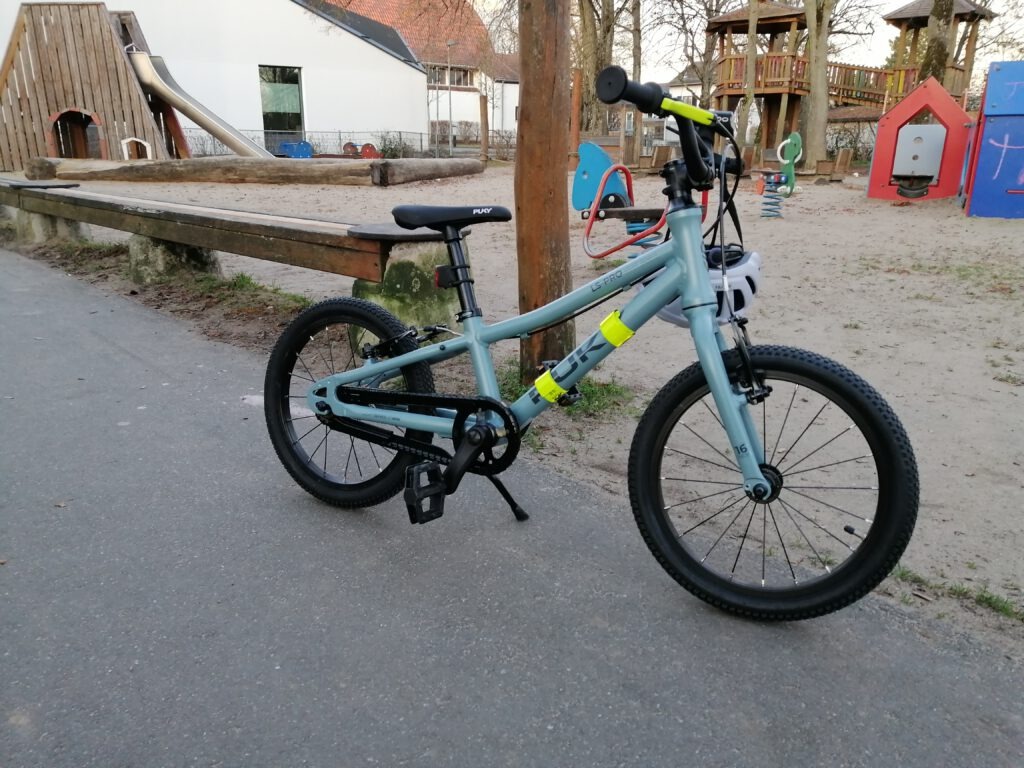
The brake levers are colour-coded.
One lever is bright neon yellow, while the other is black. For an adult, distinguishing left from right and remembering which lever operates which brake is automatic. (That being said, as a teenager I crashed heavily when pulling the front rather than the rear brake once). For a preschool child, it is another piece of information that has to be learned and recalled quickly.
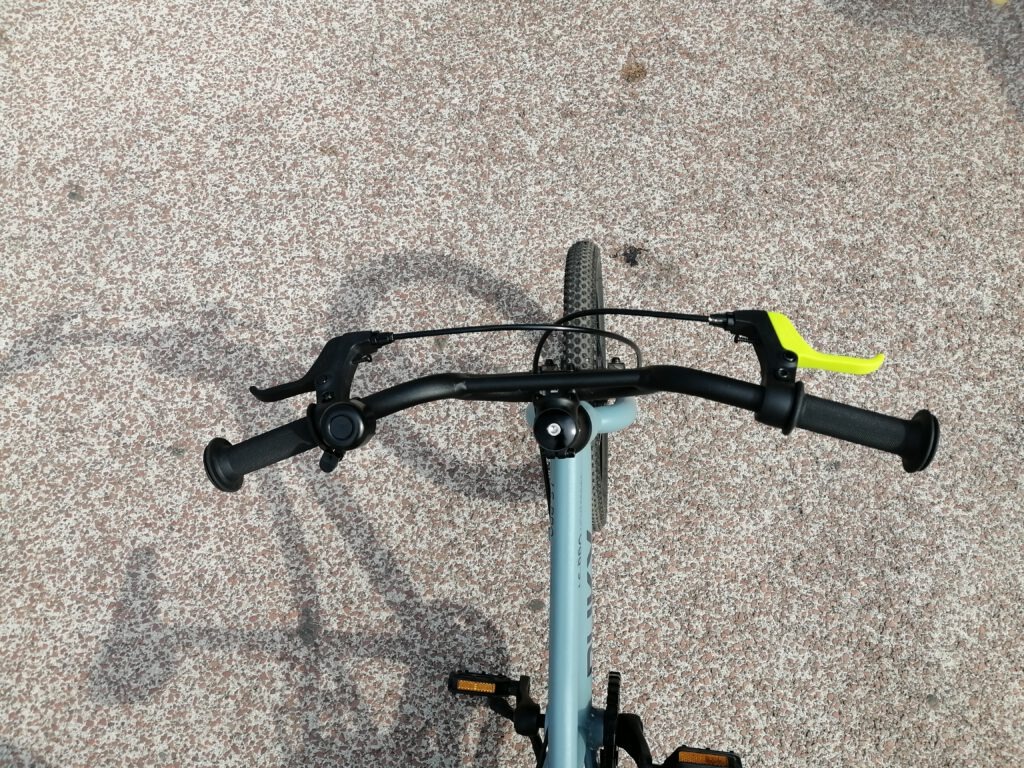
Making the two controls visually distinct gives parents and children an immediate reference. Instead of an abstract instruction about left and right, a parent can refer to a clearly identifiable colour.
It sounds almost trivial. In practice, we found it excellent.
Over the course of the test, the distinction helped with anticipating and communicating braking behaviour. It is one of those rare design ideas that is extremely inexpensive and extremely obvious – once somebody has thought of it.
We would like to see the principle adopted much more widely on bikes for preschool-age children.
Everyday safety
There is no dedicated lighting system or battery-powered light included as standard. A little bit of a pity that Puky didn’t install front and rear reflectors that could have provided at least passive visibility when illuminated. So anyone expecting the bike to be used in darker conditions (such as morning rides to kindergarden) should consider adding suitable clip-on lights.
The supplied bell is basic but effective. More importantly, its position is appropriate for a child: our rider could operate it with a thumb while maintaining a grip on the handlebar. Again, that is a small detail, but it illustrates the wider ergonomic philosophy of the bike.
A kickstand is included and arrived pre-installed on our test bike. It provided a stable platform and became one of those components that is easy to overlook on a specification sheet but difficult to give up in daily life.
Kindergarten, the sports hall, an ice-cream stop – children constantly leave their bikes somewhere. Giving them a simple way to park the bike rather than dropping it onto the ground helps protect it and makes independent everyday use easier.
Drivetrain: simplicity is both the strength and the limitation
The LS Pro uses a single-speed freewheel drivetrain with a 28-tooth chainring and 15-tooth rear sprocket.
The freewheel means the cranks can be rotated independently into a convenient starting position. Combined with the relatively easy gearing, this makes pulling away straightforward.
That proved particularly useful in exactly the type of riding for which this bike makes sense: trips to kindergarten or school, urban riding and routes involving repeated stops at crossings and traffic lights. A young child can stop, position the pedals and get moving again without fighting a heavy gear.
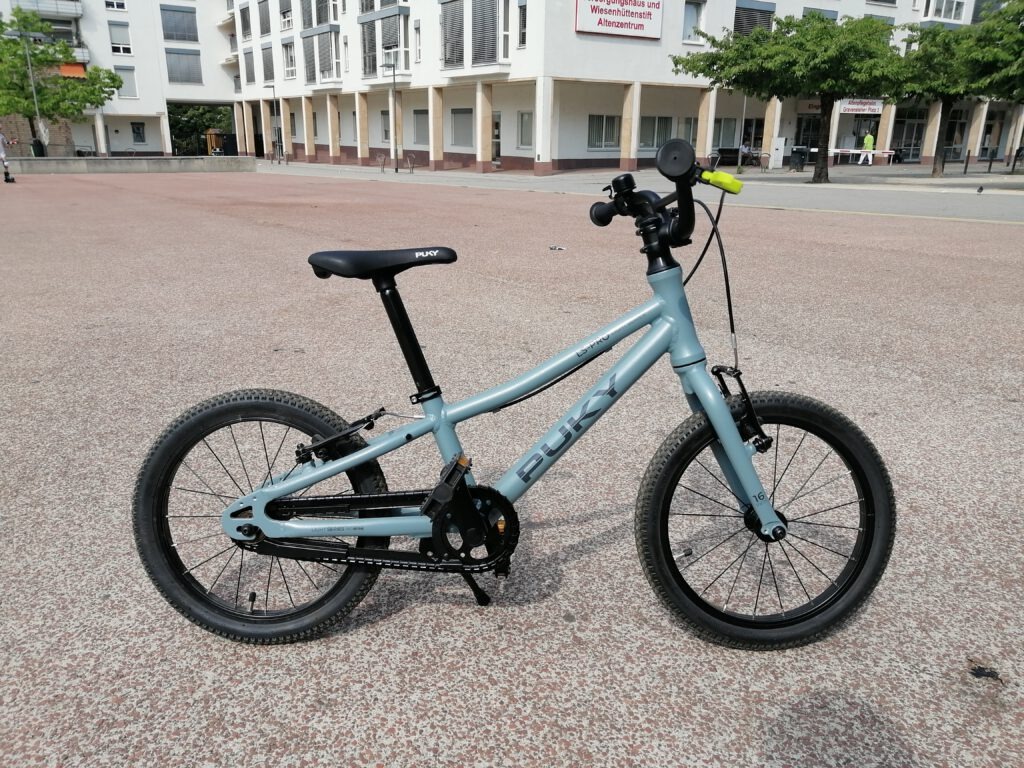
There is, however, another side to that simplicity. As the rider becomes stronger, the same gearing eventually becomes too short. On flat ground, there comes a point where the child can spin the pedals quickly without gaining much more speed.
We experienced precisely that progression during our long-term test. Towards the end, when our test rider was over 5 years old, a geared drivetrain was increasingly missed. The sensation of “spinning out” became much more frequent.
That does not make the drivetrain a bad choice. It demonstrates where the LS Pro sits in a child’s development.
For a younger rider, simplicity and easy acceleration are major advantages. For an older or particularly confident rider who wants to cover distance at greater speed, gears become increasingly attractive. Within Puky’s LS Pro range, gearing is introduced at the 20-inch size, where a seven-speed setup is available.
On the road – and away from it
Our test covered 479 km between June 2025 and July 2026, so this was considerably more than a quick ride around the block.
Approximately 50% of the riding took place in an urban environment on trips to kindergarten, including asphalt and paving stones. Another 30% was on paved cycle paths, while roughly 20% consisted of field and forest tracks during longer rides.
The 16 × 1.5-inch profiled tyres, combined with the low overall weight, gave the bike useful versatility across those environments.
That makes the LS Pro more than a bike for immaculate cycle paths. For the three- to four-year-old age group in particular, we found it capable of delivering plenty of fun across the mix of surfaces encountered during normal family riding.
Assembly
The bike arrived largely pre-assembled. The remaining work was straightforward: the handlebar needed to be inserted into the steerer and secured, and the pedals had to be fitted. There was no complicated build process before getting the bike ready to ride.
Child perspective
- Easy to handle: At 5.5 kg, our rider could push, park and manoeuvre the bike independently from an early stage.
- Easy to get moving: The low weight and short gearing made starting and restarting particularly accessible for a young rider.
- Confidence-inspiring controls: The child-sized cockpit and colour-coded brake levers made the bike intuitive to operate.
- Eventually outgrown: As our rider became older and stronger, the single-speed gearing increasingly became the limiting factor – by the end of the test, gears were firmly on the wish list.
Verdict
If you’re looking for a first 16-inch pedal bike for a young child, the Puky LS Pro should be high on your shortlist. At 5.5 kg it is exceptionally manageable, while its child-sized controls, easy gearing and thoughtful details make independent riding remarkably accessible.
The main question is how advanced your child already is. For a three- or four-year-old learning, commuting to kindergarten and building confidence, the LS Pro’s simplicity is a major strength. If your child is already a fast, powerful rider who regularly covers longer distances, the single-speed drivetrain may become restrictive sooner than the bike’s size suggests.
After 479 km, that’s ultimately where we see the LS Pro’s sweet spot: a superbly light and thoughtfully designed first pedal bike that helps young riders do more by themselves.