There is a particular moment on a family bike ride when the mood can change very quickly. Everyone is still having fun, the route looks great, and then the next climb appears. Or the child who was happily pedalling ten minutes ago has suddenly reached the point where every metre becomes a negotiation.
That is exactly the gap the Kommit Bike Towing System is designed to fill. It is not a replacement for a child riding their own bike, and it should not turn every ride into a tow train. But after using it throughout summer 2026 with our almost six-year-old on his 20-inch Gibus bike, it has become one of those small pieces of kit that can make a surprisingly large difference.
Short version: it works very well, it is genuinely easy to live with, and it can extend the realistic range of family rides considerably. In our case, that often meant another 15 to 20 kilometres—or simply the option to include a longer climb without turning the whole day into an endurance event for everyone involved.
What is the Kommit system?
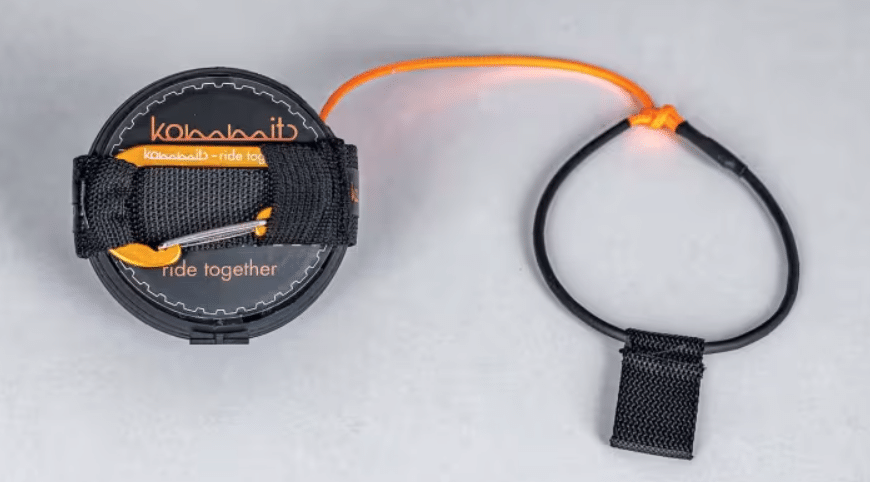
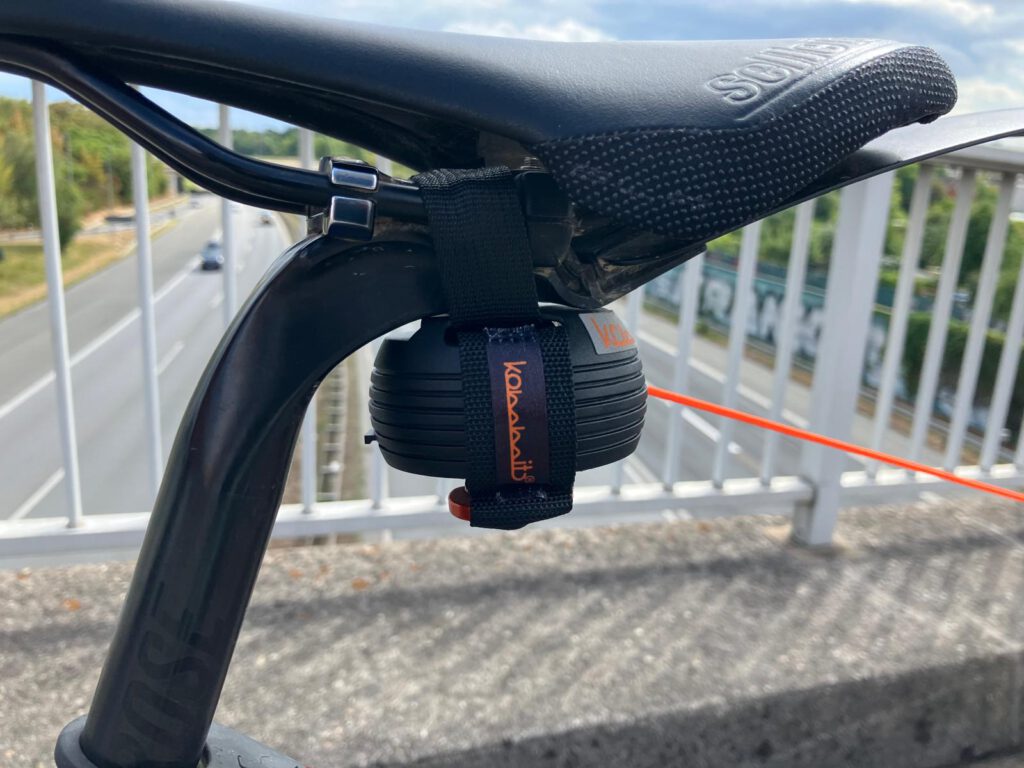
The main unit is a compact retractable towing line that attaches beneath the saddle of the towing bike. It weighs just 138 g according to Kommit, has a two-metre line and is rated for up to 120 kg of towing load. That means the combined weight of a typical child and their bike is well within the system’s stated limit.
Kommit offers two different ways to create the attachment point on the child’s bike:
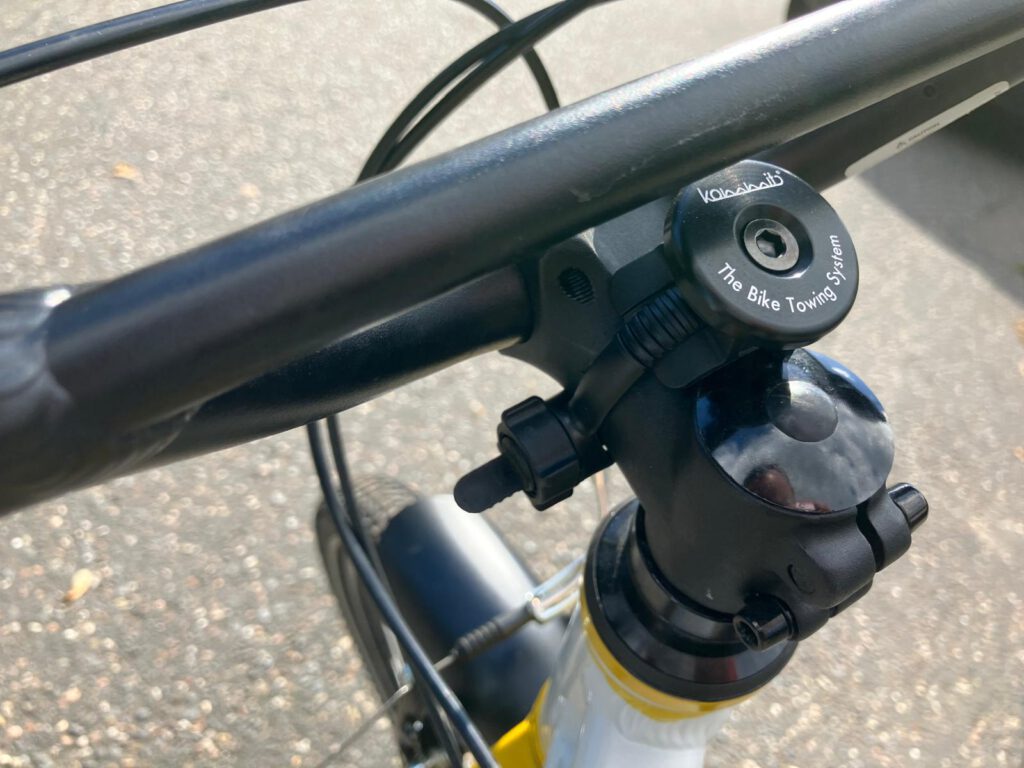
- The Bike Mount is a compact, tool-free mount for the stem or handlebar—particularly useful where there are no suitable stem clamp bolts, as on some Woom bikes.
- The Bike Bungee is an alternative attachment point that adds elastic travel between the towing line and the child’s bike.
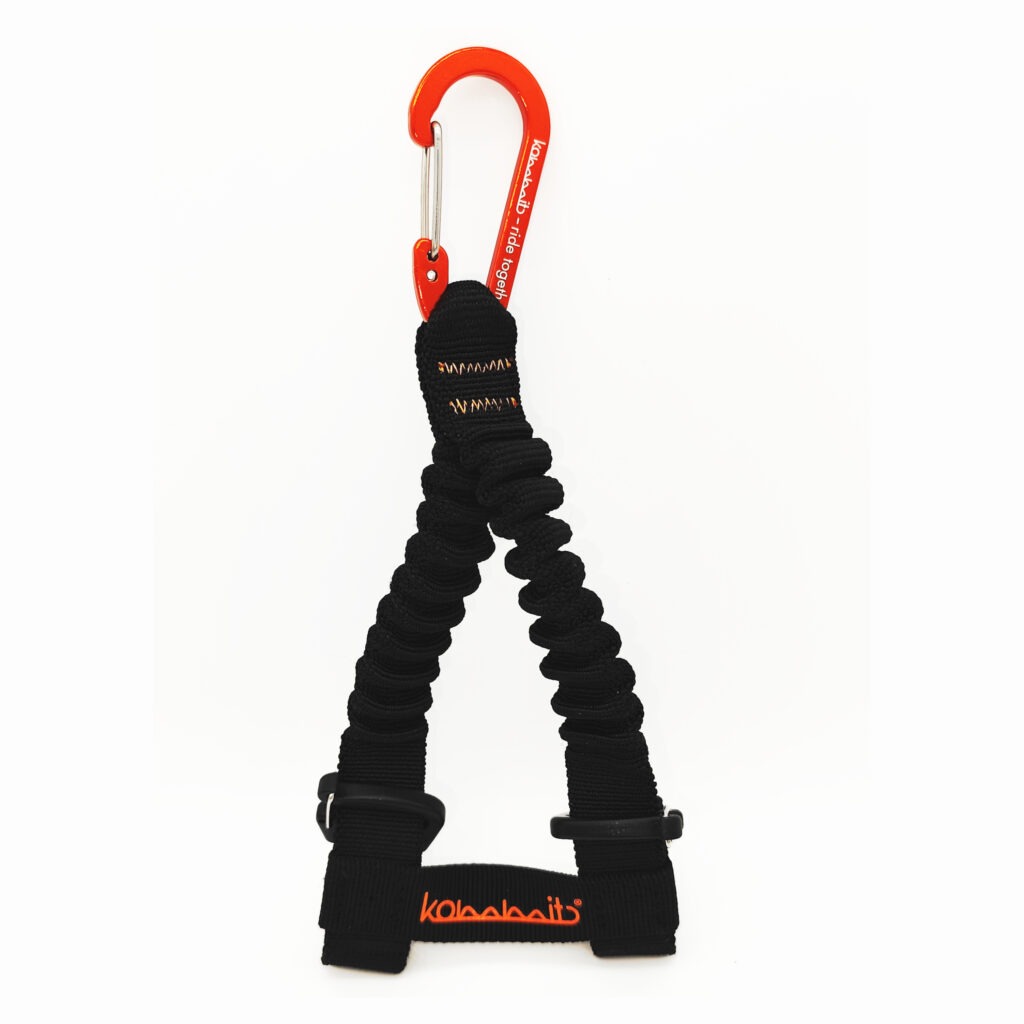
The core towing system costs €59.95, while the Bike Mount and Bike Bungee are each €24.95 at the time of writing.
Installation: small, tidy and confidence-inspiring
The towing unit is very easy to attach beneath the saddle. Its long, tapered webbing strap makes threading and tightening straightforward, even without a tool. At first glance, it can look as though there is a little too much play in the setup. Once properly fixed, though, it sits absolutely solidly in place.
It is also one of the least intrusive systems we have used. The unit stays tucked away beneath the saddle, does not change the feel of the towing bike in any meaningful way and is compact enough to leave installed between rides. The line retracts neatly after use, rather than creating another loose strap to wrap around a frame or stuff into a pocket.
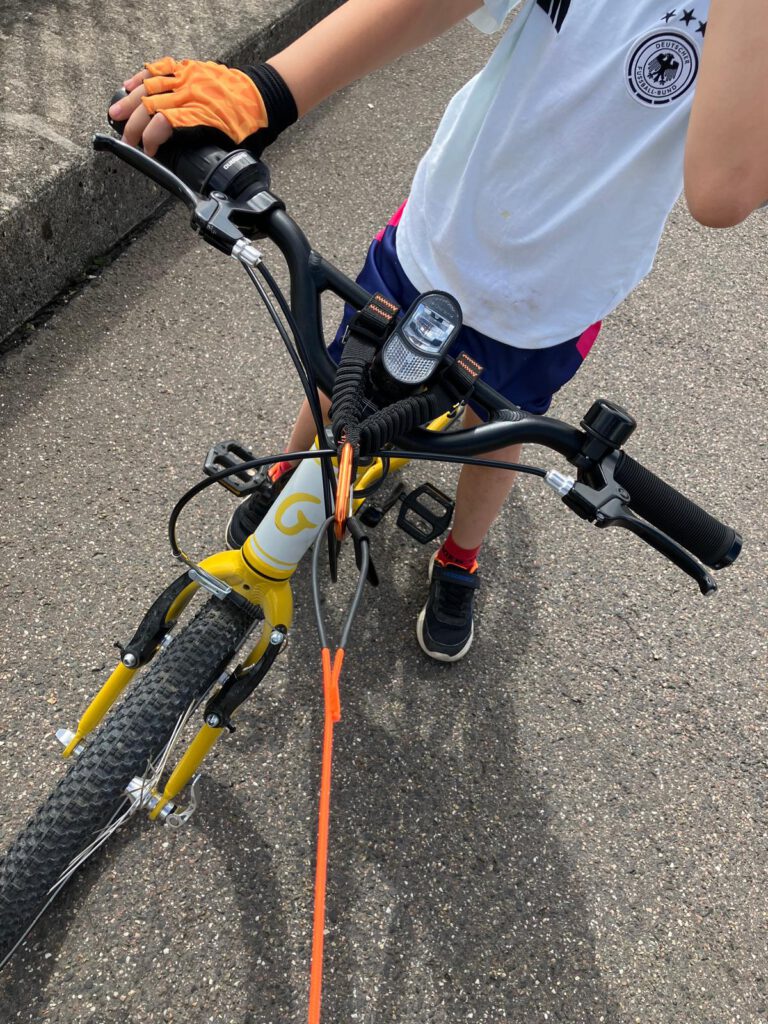
On the child’s bike, the Bike Mount is the more discreet option. It sits directly at the stem and barely adds visual clutter. The Bike Bungee is slightly more noticeable on the handlebar, but it was never really in the way. And if you do not need it for part of a ride, it can be removed in moments and put into a backpack or pannier.
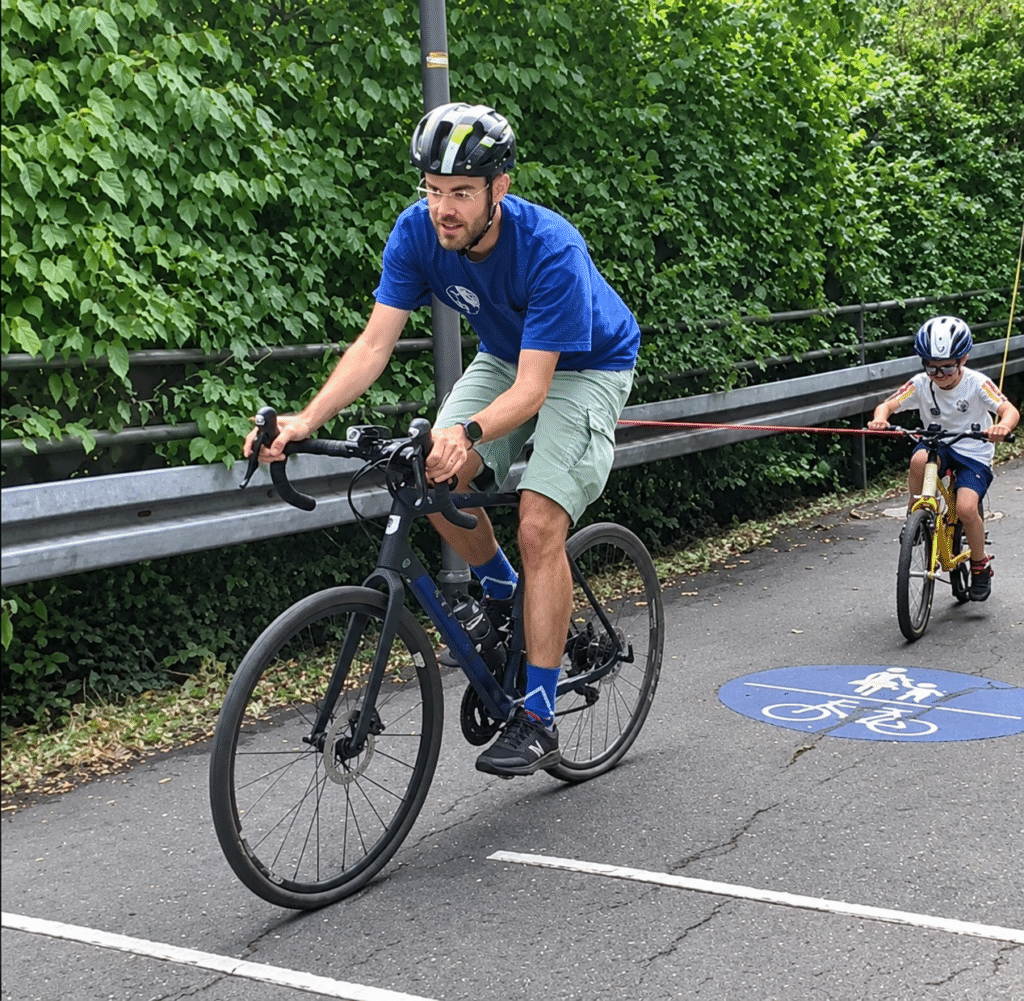
Connecting the two bikes is, quite genuinely, child’s play. When stopped safely at the side of a route, our son could reach forward, pull out the line from the rear bike, clip it into his own attachment point and be ready to go. That independence is a small detail, but it helps the system feel like part of the ride rather than a parental rescue operation.
Bike Mount or Bike Bungee?
For an experienced child who is already comfortable with towing, the compact Bike Mount makes a lot of sense. It is clean, simple and unobtrusive.
But for beginners, I would spend the extra €24.95 on the Bike Bungee. Not because the Mount does not work, but because the Bungee makes the whole experience noticeably more forgiving. Its elastic section softens changes in tension, reducing the sharper pull that can otherwise reach the child’s handlebar when the adult starts pedalling or changes cadence.
That matters especially during the first few outings. The tow line is under tension, and the child absolutely feels it. The Bungee smooths the transition and makes it easier for both riders to find a rhythm. It is the version I would choose first for a five-, six- or seven-year-old getting used to the system.
On the bike: more range, not less riding
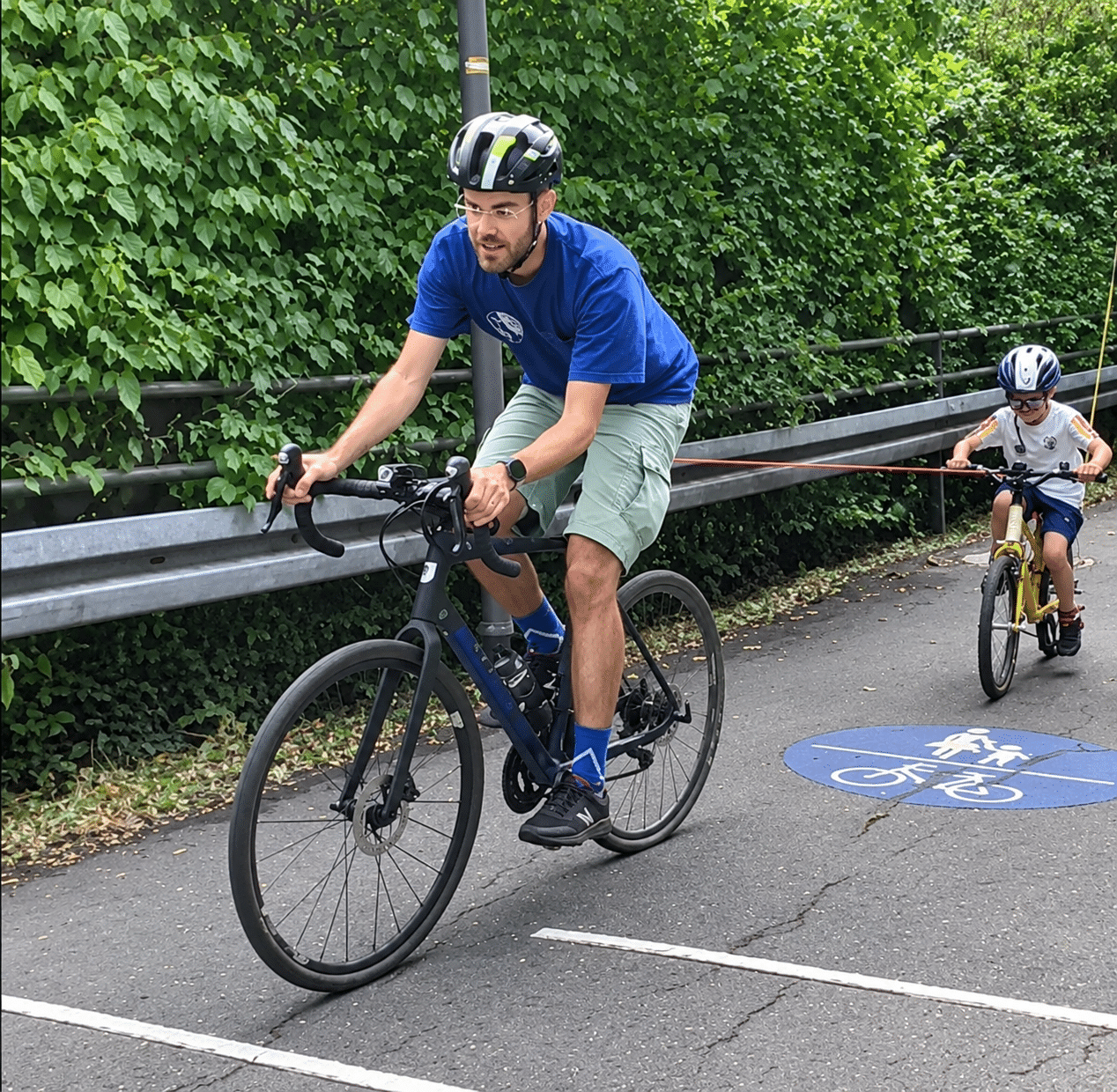
We used the Kommit system in a range of situations over the summer: on longer family rides, for tired legs on flatter sections and on sustained climbs. One 50 km outing with the Gibus 20-inch bike was particularly illustrative. We used the line for the full length of two longer climbs, then again on a flatter section when fatigue began to take over.
The most useful discovery was the recovery effect. A couple of minutes being towed did not merely help our son reach the next stop. It often gave him enough of a break to ride independently again for another ten minutes or more. That turns the system from a “get home” solution into a tool for keeping a child involved in the ride.
He was still pedalling while being towed, often enthusiastically. And that is the sweet spot: you are not dragging a passive passenger along, but giving a young rider a little support when they need it, so the ride can remain enjoyable on their own terms.
We tested it behind a road bike, a cross bike and an e-bike. An e-bike naturally makes the added load less noticeable, particularly on climbs. But it also asks for more care when moving off: motor assistance can make initial acceleration feel abrupt if the adult is not deliberate and smooth. So please make sure to not start in Turbo-mode.
Behind a non-assisted bike, the towing effort is more apparent—but also easier to modulate. I found it a little like a low-speed time-trial drill: settle into a round pedal stroke, keep the upper body quiet and avoid sudden changes in power. The more consistently the line stays tensioned, the calmer and more comfortable it feels for the child behind.
Please note that the company’s recommended top speed is at 12 km/h (roughly 7,5 miles an hour). Truthfully, I have to admit that we went well beyond that on false flat sections – and 25 km/h has worked just as well in terms of safety and consistent pressure distribution.
Start slowly—and practise before making it a habit
This is not a system to unbox and immediately use on a busy family commute. Kommit’s own safety information states that the towing system must not be used in road traffic, must never be used downhill, and requires riders to remain in line, start without sudden jerks and keep the area around the line clear. Those instructions are worth following literally.
For the first two or three rides, I strongly recommend going out with two adults: one towing in front and one riding behind the child. The rear rider can watch how the child holds their line, see whether they are coping comfortably with changes in pull and give simple tips straight away.
Start on a familiar, low-traffic route with few corners. Towing through bends is perfectly manageable, but it is something both riders should learn before adding traffic, narrow paths or a more complicated route into the mix. Keep the pace modest at first and build it gradually once everyone understands how the system reacts.
One rule needs to be very clear for the child: both hands stay on the handlebar. When the front rider applies pressure to the pedals, speed builds more quickly than a child might expect—even behind a regular bike. The goal is not to chase a number on the computer; it is to find a comfortable, controlled pace for the child, route and conditions.
For the same reason, I would avoid using it on larger roads or anywhere with regular motor traffic, especially when riding solo with a child. A small wobble, an uneven surface or a moment of distraction can become much harder to manage while connected by a towing line.
Where it works best—and where it does not
Smooth climbs and predictable hard-packed paths are where the Kommit system shines. It gives a family route a little extra ambition without turning it into a logistical project.
Loose gravel is more complicated. Our son had a couple of minor tumbles on gravel and then generally preferred riding those sections independently. That makes complete sense: uneven terrain is already harder for a child to steer and balance on, and a towing line does not make it easier. The Kommit can extend a ride, but it is not a magic bypass for technical terrain.
Kommit versus tow bars
Compared with rigid systems such as a FollowMe-style setup or towing bars, Kommit’s advantages are very clear: it is significantly cheaper, much faster to mount and vastly easier to carry. It does not turn the adult’s bike into a permanently modified machine, and it can remain quietly tucked under the saddle until needed.
The trade-off is that it demands more awareness from everyone involved. A rigid system guides the child’s bike more directly; a towing line asks the child to steer confidently, while the adult needs to ride smoothly and choose the terrain carefully. For families who mainly want occasional help on climbs, long rides or tired-legged return journeys, that is a very worthwhile trade.
Verdict
The Kommit Bike Towing System has changed what is realistic for our family rides. It has not made every outing longer by default—sometimes a short ride is still exactly the right ride—but it has removed the hard limit that a long climb or a tired six-year-old can otherwise impose.
The system is light, tidy, quick to use and easy enough for a child to understand. The Bike Mount is a clean attachment option; for newcomers, though, I would pick the Bike Bungee for its more forgiving ride feel.
Used responsibly, on suitable routes and with a little practice, it is an excellent alternative to larger and more expensive towing systems. It does not take the pedalling away from children. At its best, it gives them just enough support to keep pedalling—and lets the whole family keep enjoying the day.
Recommended for: families with children roughly aged five to eight who already ride confidently, especially where hills or longer distances are part of the plan.
Not for: downhill use, public-road traffic, technical or loose terrain, or a first attempt without a calm route and proper supervision.